Checking vital signs at home, such as blood pressure, pulse, oxygen level, weight and blood sugar, helps your parent’s doctor catch problems early with conditions like high blood pressure, heart failure, COPD and diabetes. A home health nurse can teach your family how to take accurate readings, keep a log and know which numbers mean “call the doctor” and which mean “call 911.”
The right numbers are different for every person. Ask your parent’s doctor to write down your parent’s own targets and when to call. The ranges below come from the sources named, as general guidance only.
How a home health nurse helps
Medicare.gov lists patient education and monitoring of unstable health among the skilled nursing services Medicare covers at home. For a parent with a chronic condition, a nurse may:
- Check vital signs on each visit and compare them with earlier readings
- Watch you take a reading and correct your technique
- Set up a simple log and explain what to write down
- Teach the warning signs for your parent’s condition
- Report changes to the doctor, who may adjust medicines or the care plan
Home health care is meant to be part-time. The goal is for your family to feel confident doing this between visits. If your parent qualifies for Medicare home health, covered services cost nothing. See our page on skilled nursing at home.
Blood pressure
Good technique
The American Heart Association recommends:
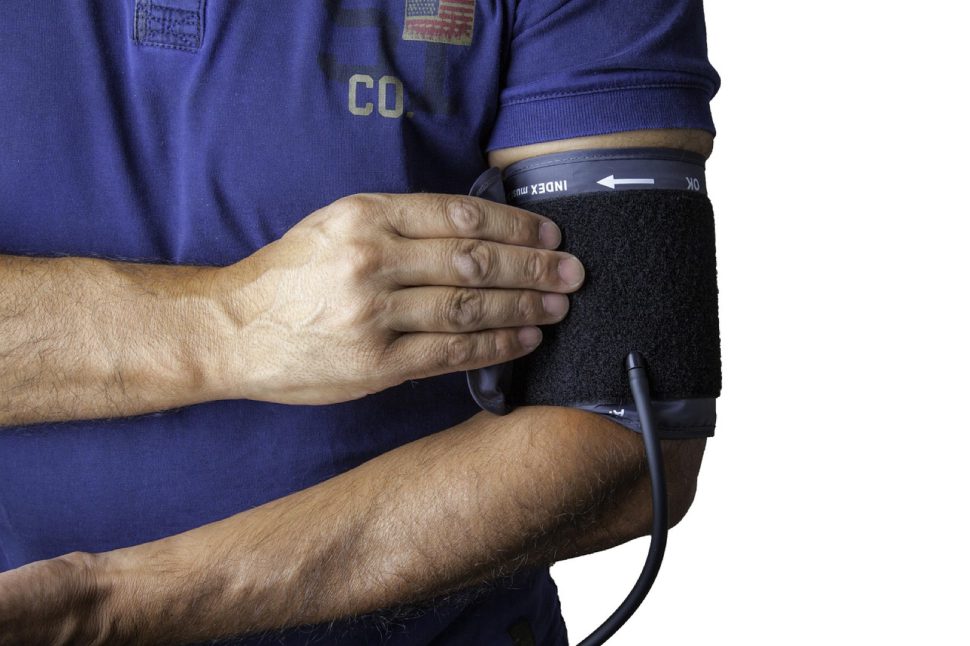
- Use an automatic, validated monitor with a cuff that goes on the upper arm, not the wrist or finger. Make sure the cuff fits.
- No caffeine, smoking or exercise for 30 minutes before. Empty the bladder first.
- Sit quietly for at least 5 minutes, back supported, not talking or using a phone.
- Rest the arm on a table at heart level, with the cuff on bare skin just above the bend of the elbow.
- Take two readings one minute apart, at the same times each day, and write them down.
Bring the monitor to the next doctor visit once so the doctor or nurse can check it against their own reading.
When to call
The AHA says that if a reading is higher than 180/120, wait one minute and test again. If it’s still that high:
- With no symptoms, contact your parent’s doctor right away.
- With symptoms such as chest pain, shortness of breath, back pain, numbness, weakness, change in vision or trouble speaking, call 911. Don’t wait to see if it comes down.
Also call the doctor about readings that are much higher or lower than usual for your parent, especially with dizziness or fainting.
This short video from the American Heart Association shows how to take an accurate blood pressure reading at home.
Pulse
MedlinePlus explains how to check a pulse: place two flat fingers on the inside of the wrist below the thumb and count the beats for a full minute (or 30 seconds and double it). It lists a normal resting heart rate for adults, including seniors, as 60 to 100 beats per minute. MedlinePlus also advises asking the provider what a normal pulse should be for your parent, since that can differ.
Call the doctor if the resting pulse is often above or below your parent’s normal range, or if it feels irregular.
Oxygen level
A pulse oximeter clips on a fingertip and estimates the oxygen level in the blood. MedlinePlus notes that readings can be off by 2% to 4%. Dark nail polish, artificial nails, cold hands, poor circulation and darker skin can all affect accuracy. Warm the hand first and remove nail polish.
MedlinePlus says a normal level is usually 95% to 100%, though people with lung conditions such as COPD may run lower. It advises:
- Call the provider if the level is 92% or lower.
- Seek immediate medical care if it falls to 88% or lower.
Your parent’s doctor may give different numbers, especially if your parent uses home oxygen. Don’t change oxygen settings without the doctor’s order. And trust symptoms over the device: bluish lips or face, trouble breathing or chest pain need care right away, whatever the reading says.
Daily weight for heart failure
With heart failure, sudden weight gain is often extra fluid, not fat. MedlinePlus advises weighing every morning on the same scale, after using the bathroom and before eating, in similar clothes. Write it down every day.
MedlinePlus says to contact the provider if weight goes up by more than 2 to 3 pounds in a day or 5 pounds in a week. Some doctors use a smaller number, so follow your parent’s own instructions. Also call about:
- New or worse shortness of breath, including when lying down or at night
- More swelling in the feet, ankles or legs
- A cough that won’t go away
- Feeling very tired, weak or dizzy
Blood sugar
If your parent has diabetes, the doctor will set blood sugar goals and tell you how often to check. A nurse can teach your parent to use the meter and keep a log.
Low blood sugar
According to the National Institute of Diabetes and Digestive and Kidney Diseases (NIDDK), low blood sugar is often a reading below 70 mg/dL, though your parent’s doctor may set a different number. Being 65 or older is a risk factor. Signs include shakiness, hunger, dizziness, confusion, a fast heartbeat and trouble speaking clearly. NIDDK describes the usual treatment:
- Eat or drink 15 to 20 grams of fast sugar, such as 4 glucose tablets or 4 to 6 ounces of fruit juice.
- Recheck in 15 minutes.
- Repeat if it’s still low.
Severe low blood sugar, such as passing out or a seizure, needs treatment right away. NIDDK says glucagon is the best treatment when someone can’t treat themselves, and to call 911 right after giving it, or right away if there is no glucagon kit. Ask the doctor whether your parent should have one and have the nurse show you how to use it.
High blood sugar
MedlinePlus lists thirst, blurry vision, feeling weak or tired and urinating often as signs of high blood sugar. Call the doctor if readings are too high or too low and you don’t know why. Ask whether your parent should check for ketones, and when.
When to call 911 right away
Don’t wait for a nurse visit or a call back. Call 911 for:
- Heart attack signs, such as chest discomfort, pain in the arms, back, neck or jaw, shortness of breath, cold sweat, nausea or lightheadedness, according to the AHA
- Stroke signs: sudden loss of balance, vision changes, face drooping, arm weakness or trouble speaking
- Blood pressure above 180/120 with symptoms
- Severe trouble breathing, or bluish lips or face
- Low blood sugar with passing out or a seizure
Keep a simple log
Write down the date, time, each reading and any symptoms. Bring the log to every appointment. In South Florida, keep a paper copy with your parent’s medicine list in a hurricane go-bag, along with spare batteries for the blood pressure monitor, meter and oximeter. If your parent is more comfortable in Spanish or Haitian Creole, ask the agency whether a nurse who speaks that language is available for teaching visits.
To find help, search Medicare-certified home health agencies in Miami-Dade, Broward and Palm Beach counties, or browse by area.
Sources
- Medicare.gov: Home health services
- American Heart Association: Monitoring your blood pressure at home
- American Heart Association: Understanding blood pressure readings
- American Heart Association: Heart attack and stroke symptoms
- MedlinePlus: Pulse
- MedlinePlus: Pulse oximetry
- MedlinePlus: Heart failure – home monitoring
- NIDDK: Low blood glucose (hypoglycemia)
- MedlinePlus: High blood sugar